
Disclosure: This post contains affiliate links for Hostinger and Printify. If you click a link and make a purchase I may earn a commission at no extra cost to you. I only recommend tools that are genuinely suited to the work described.
Before starting her business, Sally Willbanks was known as an accomplished Australian artist. She admits that while she loves being an artist, painting is quite a solitary activity. It made her feel disconnected from her family—homeschooling the kids by day and spending time painting in her studio at night.
Sally started looking for ways to keep herself busy and working while involving the kids in the process. That’s when the idea of starting a clothing line came to her and she decided to sell t-shirts with designs that promote neurodiversity.
Both of Sally’s kids are neurodivergent—they’re autistic and ADHD with a couple of other things going on too. The kids, who ND Renegade followers fondly know as Boo and Bear, have been actively involved in the business since the beginning. ND Renegade helps them learn about the business side of running an online store. They see how much time and effort their mom puts into it and what it takes to get something up and running.
She had $0 to invest in a clothing line. No warehouse. No sewing machine. No business degree.
She uploaded her first designs to a print on demand store.
People buying from ND Renegade not only help Sally put food on the table for her family, but they also help neurodivergent people. Previously, ND Renegade gave 10% of all profits to a specific charity, but recently they found another way to help those in need.
A lot of autistic people have a hard time getting assessed and diagnosed because of factors such as cost, gender misconceptions, and race issues. That’s why Sally decided to start the ND Renegade grant for autism diagnosis to take care of the cost of the process for people in need.
She has never touched a single piece of inventory.
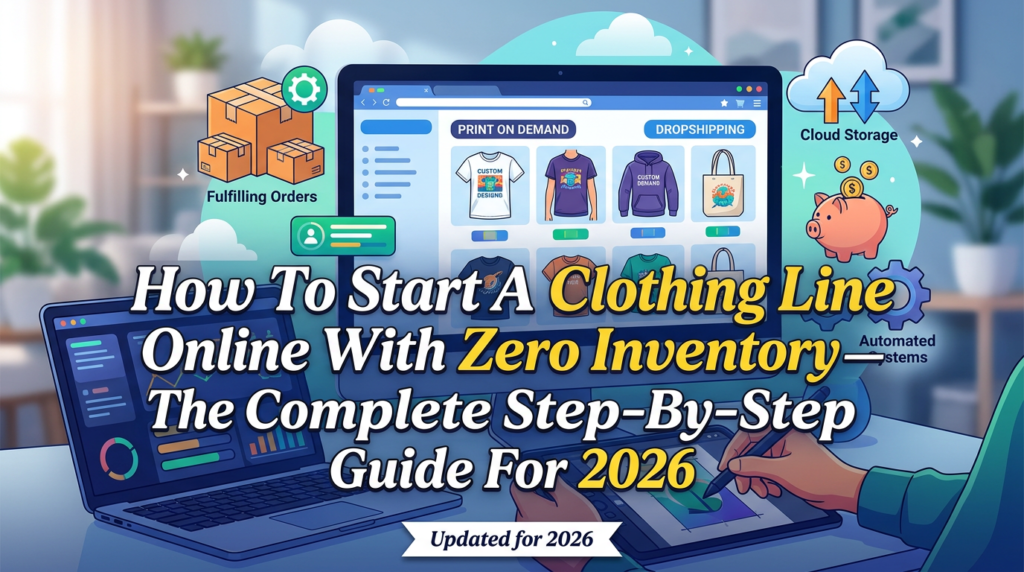
This is the story of the model I am going to teach you today. And before we go any further I want you to understand one thing clearly: the clothing line you are about to learn how to build does not require you to manufacture anything, store anything, ship anything, or invest thousands of dollars before you make your first sale.
It is called print-on-demand. And it has genuinely changed who gets to have a clothing brand.
What Print On Demand Actually Is And Why It Changes Everything
Let me explain the model as simply as possible because I think a lot of people hear “print-on-demand” and still picture a complicated process.
Here is how it works:
You create designs. You upload those designs to a print on demand platform (I will be recommending Printify specifically and explaining exactly why). You connect Printify to your own website or online store.
When a customer visits your site, browses your designs, and places an order — Printify receives that order automatically, prints the design on the product the customer chose, and ships it directly to your customer’s door.
You never touch the product. You never pay for the product until it is sold. You never manage inventory, never worry about unsold stock, and never deal with logistics.
Your job is to create designs people want to buy and then market those designs so people find them.
That is it.
The economics look like this: A t-shirt costs Printify approximately $8-12 to produce depending on quality and style. You set your retail price at $25-35. The difference $13-23 is your profit margin, paid to you after the customer’s order is fulfilled.
You keep the margin. Printify keeps the production cost. The customer gets their shirt.
Why Your Niche Is The Most Important Decision You Will Make
Before you design a single thing. Before you set up a single page. Before you even decide what products you want to sell.
You need to choose your niche. And you need to choose it well, because your niche is the foundation everything else is built on.
Let me explain what a niche is and then show you exactly how to choose one that gives you the best possible chance of building sustainable income.
What A Niche Is
A niche is not just a topic. A niche is a specific community of people with shared identity, values, or experiences who actively seek products that speak to who they are.
The difference between a niche and a broad category is specificity and belonging.
“Fitness” is not a niche. “Christian mothers who run half marathons for charity” is a niche. The second group has identity, shared values, inside references, specific challenges, and a strong reason to buy products that speak directly to them rather than to everyone.
The more specifically your designs speak to a real community, the more that community feels seen and people who feel seen become loyal customers who come back, who share, and who tell other people in their community.
Why Impact Focused Niches Perform Exceptionally Well
This is something I want to expand on because I think it is one of the most underappreciated principles in building a clothing brand.
The clothing lines that build loyal, passionate communities are not usually the ones built around the broadest possible appeal. They are the ones built around specific values, specific causes, specific identities that a real group of people has an emotional stake in.
When Kimberly built her faith-based clothing line she was not just selling t-shirts. She was giving her community wearable expressions of values they hold deeply — things they want to see in the mirror, things they want to say to the world when they walk into a room without opening their mouth.
That emotional connection is what drives repeat purchases, word-of-mouth sharing, and organic community growth that no paid advertising budget can buy.
An impact-focused niche one built around a community, a cause, or a value system that genuinely matters to the people in it creates this emotional connection naturally.
Some examples of impact-focused niches that have built successful clothing brands:
Mental health awareness. Designs that normalize conversations about depression, anxiety, and healing. The mental health community is enormous, deeply connected on social media, and actively looks for ways to signal solidarity and reduce stigma. A clothing line that speaks directly to this community can become a meaningful part of how members identify and connect with each other.
African cultural pride. This is my own territory with Nima African Art Studio. The African diaspora globally is one of the most economically active and underserved consumer markets in the world. They are actively looking for products that connect them to their heritage — to their specific cultures, their specific histories, their specific visual traditions. The demand is real, the competition from mainstream brands is thin, and the community loyalty when you genuinely represent them is extraordinary.
Environmental sustainability. The generation of young people entering peak spending years right now are deeply motivated by environmental values. A clothing brand built around environmental activism and sustainability especially one that uses its marketing to actually contribute to environmental causes builds the kind of community trust that turns customers into advocates.
Specific professional identities. Teachers, nurses, social workers, engineers, chefs — professional communities with strong shared identity often feel invisible in mainstream culture and are powerfully drawn to products that say “I see what you do and I value it.” These niches are less competitive and have highly engaged buyers.
Specific cultural communities. Haitian diaspora. Ghanaian diaspora. Nigerian diaspora. Caribbean heritage communities. These specific groups have shared references, shared aesthetics, and shared pride that mainstream brands completely fail to serve.
Real Stories Of People Who Built Clothing Income With Impact Niches
Sally Willbanks – neurodivergent Community, Australia
I already told her story at the beginning of this article.Designing apparel is what helps Sally get her creative juices flowing after she put painting aside.
Her designs are based on her knowledge of neurodiversity, experience from years of therapy with her children, and all the books she’s read on the matter. And as ND Renegade’s following on social media started to grow, followers have also chimed in with information that helps Sally decide on the next designs she’ll put out in the world.
Customers are always commenting on ND Renegade posts about how they should release a certain design. One of the latest requests was a t-shirt design “Woke up autistic again” that’s already loved by many customers.
Oftentimes tees aimed at autistic people have puzzle pieces on them that the autistic community doesn’t like or sometimes even find offensive. Autistic people aren’t a missing piece of an unfinished puzzle they have differences but they’re complete. That’s when Sally knew that the designs that ND Renegade offers needed a different spin.
That’s why everyday life and the people around Sally are also a great source of inspiration. One such example is the Lining Up Cars T-Shirt which was inspired by the fact that a lot of autistic kids like to line up their toys. Whereas the idea for the Fans T-Shirt came from an autistic boy Sally knew who liked to go around their house and turn all the fans on and watch them spin.
Mike Pasley Famous in Real Life
Started by Mike Pasley, an ecommerce entrepreneur with strong marketing and graphic designing skills and a Master of Science degree in entrepreneurship from the University of South Florida, this brand caters to a niche market. However, it wasn’t all smooth sailing for Pasley.
It took him years of hard work and switching between different jobs before he started this successful T-shirt brand that made a whopping revenue of $700,000 within one year of its launch. The brand typically has a humorous approach to its designs, focusing on pop culture. Its interesting designs really resonate with the customers’ personalities.
Taking inspiration from people around you and upskilling yourself and the technology for print on demand products is the secret recipe for success in this business, according to Pasley..
Lessons to Learn
- Pick an unexplored market niche and tap into it.
- You may need more research to come up with merchandise that resonates with the target audience, but in the long run, hard work pays off.
- Use realistic images on your website. It is one of the main reasons why Famous in Real Life has created a lasting impact in the customer’s mind.
- Continue to innovate and come up with new ideas.
Liz -Canada PassonFruit.
It’s a leading Canadian print on demand store and the reason why Liz Bertorelli stepped into this business is absolutely adorable and worth it!
In 2013, Liz had a goal to get a French bulldog, but to get her hands on one, she needed to make an extra $5,000. So to fulfill her dreams, she started an online print on demand T-shirt company as a side hustle along with her full-time job. And guess what? She reached her goal within a few months, but she didn’t stop there!
So five years, some tears, and one adorable French bulldog later, Liz is now a proud owner of PassionFruit, an LGBTQ+ apparel brand that aims to celebrate pride all year round with its range of clothing and accessories.
Lessons to Learn
One of the reasons for the brand’s success is active involvement in the pride community. So if you believe in a cause, use strong descriptive words and images on tees, shirts, and other products to get the message across.
Your business will take time to reach its true potential. PassionFruit took over four years of hard work and dedication before gaining traction.
Use blogs, images, and social media to promote your merchandise. Remember, more exposure equates to better reach.
These stories are not exceptional cases. They are patterns. The pattern is always the same: find a real community, design specifically for them, give them products that make them feel seen, and let the community do the marketing.
Source :https://printbest.com/blog/print-on-demand-success-stories-to-inspire-you
Step By Step: How To Build Your Clothing Line
Now let me walk you through exactly how to build this. Every step, in order, with specific tools and specific actions.
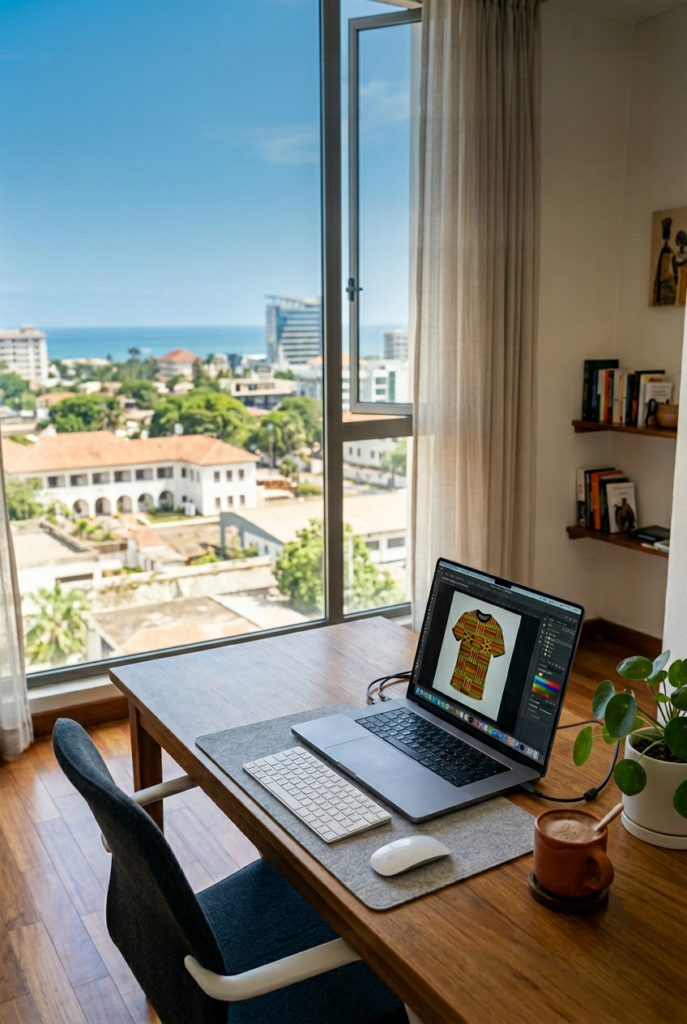
Start your clothing brand with 0 Inventory
Step 1: Choose Your Niche (Week 1)
Using everything I explained above, choose your specific niche. Write down your answers to these questions:
What community do I belong to or understand deeply from the inside? What cause or value system am I genuinely passionate about? What are the specific phrases, references, aesthetics, and humor that THIS community specifically would recognize and respond to? Is there existing demand — are people searching for products in this space?
To check demand before you invest a single hour of design time, go to Etsy and Redbubble and search for designs related to your niche. Are there existing products? Are they selling? (You can see this on Etsy by looking for items with many reviews.) If products exist and are selling — there is demand. You are not trying to create a market. You are serving one that exists.
Step 2: Create Your First Designs (Week 1-2)
You do not need to be a graphic designer to create great print-on-demand designs.
Free tools to create designs:
LM Arena (lmarena.ai) — Free AI image generator. Describe your design concept and it generates the image. For the African heritage niche specifically this is extraordinarily powerful — describe a Ghanaian king with gold adinkra crown in kente colors and you get a professional-quality design in 30 seconds.
Canva — Free tier is sufficient for basic text-based designs. Great for quotes, typographic designs, and simple graphic layouts. The free version gives you access to hundreds of fonts and design elements.
Adobe Express — Free alternative to Canva with additional design capabilities.
Design specifications for Printify: Always create designs at a minimum of 300 DPI. For standard t-shirt front print, aim for 3000 x 3600 pixels or larger. Save as PNG with transparent background — this is critical for any design that will be printed on fabric.
Types of designs that sell well: Text-based motivational quotes specific to your niche. Symbolic imagery connected to community identity. Humor and inside references. Heritage and cultural visual elements. Community pride imagery.
Types of designs that struggle: Generic motivational quotes that could apply to anyone. Designs that look like they were made for everyone rather than for a specific community. Overly complex imagery that loses quality when printed on fabric.
Start with five to ten designs. Do not wait until you have twenty. Five strong, specific, niche-targeted designs will always outperform twenty generic designs.
Step 3: Set Up Your Printify Account (Day 1)
Printify is the print-on-demand platform I recommend for this business. Here is why specifically.
Printify connects to a global network of print providers. This matters for African creators for a specific reason: you can choose print providers based on where most of your customers are located. If you are primarily targeting UK customers, choose a UK-based print provider. Your customers get faster delivery and lower shipping costs. If you are targeting the USA, choose a USA-based provider.
The product catalogue is extensive — t-shirts, hoodies, phone cases, tote bags, mugs, hats, leggings, wall art, and more. One set of designs can become dozens of products.
Printify’s free plan allows unlimited product designs and connects to your store with no monthly fee. You only pay per order when a customer buys. There is no upfront inventory cost whatsoever.
Setting up Printify: Create your free account. Browse the product catalogue and select three to five products to start. Upload your designs to each product. Adjust print placement using the mockup generator. Review how your design looks on the product. Set your retail prices — Printify shows you your profit margin as you price.
Printify generates professional product mockup photos automatically. These are the photos you will use on your website.
Step 4: Build Your Clothing Brand Website With Hostinger (Days 3-7)
This is where your brand lives. Your website is your store, your brand story, your community hub, and your primary sales channel.
I recommend Hostinger for building your clothing brand website for several specific reasons that matter for African entrepreneurs in particular.
→ Build your website with Hostinger
Speed from African locations. Hostinger has data centers on multiple continents and their infrastructure is built for fast loading globally — not just from USA/UK. Your store loads fast for customers wherever they are.
Price point. Hostinger’s plans start at a genuinely accessible price point, especially with current promotional pricing. For an entrepreneur building income from scratch this matters.
AI Website Builder. Hostinger includes an AI-powered website builder that can generate a complete, professional-looking website from a description. I will walk you through exactly how to use this in a moment.
WooCommerce support. Printify integrates directly with WooCommerce, which runs on WordPress, which Hostinger hosts excellently. The connection between Printify and your website is direct and automatic.
Building Your Website With Hostinger’s AI Builder — The Fast Route
If you want to go from zero to a live professional website in under two hours, Hostinger’s AI builder is your fastest path.
Here is exactly how to use it:
After signing up for Hostinger, go to your dashboard and select “AI Website Builder.” The AI will ask you a series of questions about your business:
What kind of website? Select “Online Store” or “E-commerce.” What is your business name? Enter your clothing brand name. What does your business do? Write something like: “We sell African heritage and cultural pride clothing and accessories for the African diaspora and pan-African community worldwide.” What pages do you need? Select: Home, Shop, About, Contact, Blog.
The AI generates a complete website with pages, layout, placeholder content, and color schemes based on your description. This is your starting point.
Then customize: Replace placeholder text with your actual brand story and copy. Upload your logo and brand colors. Replace placeholder images with your actual product mockups from Printify. Connect Printify via WooCommerce integration (Settings → Plugins → WooCommerce → Printify plugin → connect your Printify account).
Done. You have a live professional clothing brand website with a functioning store.
What To Do When Hostinger’s AI Has Limits — The Manual WordPress Route
Hostinger’s AI builder is excellent for getting started fast. But as your brand grows and you want more control over design, layout, and functionality, you will want to transition to a fully self-managed WordPress site.
Here is the step-by-step process:
Step 1 — Install WordPress on Hostinger: In your Hostinger dashboard, go to Websites → Add Website → WordPress. Hostinger installs WordPress automatically in one click. Choose your domain name during this process.
Step 2 — Install Astra theme: From your WordPress dashboard, go to Appearance → Themes → Add New. Search “Astra.” Install and activate. Astra is the fastest, most SEO-optimized free theme available — loading in under 1.4 seconds, with built-in schema markup for Google, and compatibility with every page builder and plugin you will ever need. 100% free and genuinely exceptional.
Step 3 — Install Starter Templates plugin: This is Astra’s companion plugin that gives you professional pre-built website templates you can import with one click. Go to Plugins → Add New, search “Starter Templates by Astra,” install and activate. Browse the template library, find a template that suits a clothing or e-commerce brand aesthetic, and import it. Your site now has a professional design foundation.
Step 4 — Install WooCommerce: Go to Plugins → Add New, search “WooCommerce,” install and activate. WooCommerce is the e-commerce engine that powers your store. Follow the setup wizard to configure your store basics: currency, location, shipping zones, payment methods.
Step 5 — Connect Printify: In Printify, go to My Stores → Connect. Select WooCommerce. Printify will give you an API key. In your WordPress dashboard, go to WooCommerce → Printify → enter your API key → connect. Now every product you publish in Printify appears automatically in your WooCommerce store with pricing you set.
Step 6 — Essential plugins to install:
Rank Math SEO — Free. The best SEO plugin available. Handles your meta titles, meta descriptions, XML sitemaps, schema markup, and gives you real-time SEO scoring as you write content. Install and configure before you publish anything.
Smush — Free. Compresses all your images automatically on upload. Product mockup images can be large. Smush keeps them web-optimized without you manually compressing each one.
WP Super Cache — Free. Caching plugin that dramatically improves your site loading speed. Install and activate immediately.
Mailchimp for WordPress — Free. Builds your email list. An email list of customers who have already bought from you is your most valuable marketing asset. Collect emails from day one.
Pretty Links — Free. Makes your affiliate links and referral links look clean and trackable. Useful if you start recommending products from your blog.

Build website with hostinger 20% discount
The SEO Strategy That Gets Your Store Found On Google
Your website being beautiful means nothing if Google cannot find it and no one lands on it. SEO — Search Engine Optimization — is what makes Google show your pages when people search for the products you sell.
Here is what you need to do, in order:
Keyword research for your niche: Go to Google and type the beginning of a search related to your niche. Note the autocomplete suggestions — these are what real people are searching for. Also scroll to the bottom of Google results and look at “Related searches.”
For an African heritage clothing brand, relevant searches might be: “african heritage clothing uk” “ghanaian pride t shirt” “african diaspora gifts” “natural hair queen shirt” “adinkra symbol hoodie”
Each of these is a keyword you can target with a product page or blog article.
Optimizing your product pages: Each product in your WooCommerce store needs: A title that includes your main keyword naturally. “Gye Nyame Adinkra Symbol Hoodie — Ghanaian Heritage Clothing” is better than “Gold Adinkra Hoodie.” A description of at least 300 words that uses related keywords naturally, explains the cultural significance, and tells people who this product is for. Alt text on your product images describing what they show.
Rank Math will show you a score from 1-100 as you write each page. Aim for 80+.
Blog content that attracts your audience: Your blog is a long-term SEO asset. Articles that answer questions your target customer is asking drive organic Google traffic that converts into sales.
Article ideas for an African heritage clothing brand: “What Is The Meaning Of The Gye Nyame Symbol?” — Educational content that ranks for people researching Ghanaian culture. “10 Meaningful Gifts For The African Person In Your Life” — Gift guide content that ranks when people are searching for gift ideas. “The History Of Kente Cloth And Why It Matters Today” — Cultural education that establishes your brand as an authority.
Write one article per week consistently. Each article is a permanent asset that continues driving traffic for years.
Marketing Your Clothing Brand The Strategy That Works Without A Big Budget
You have your designs. You have your website. Now you need customers.
TikTok first: TikTok is the single best free marketing channel for a clothing brand in 2026. The algorithm shows your content to people who are interested in your topic even if you have zero followers. Your first video can reach thousands of people.
What works on TikTok for clothing brands: Show the design process — how you created the design and what it means. Tell the story behind the niche — the cultural history, the community significance. Show real people wearing the products (order a few for yourself or for friends and family first). React to comments asking about the designs — engagement multiplies reach.
Pinterest for long-term traffic: Pinterest is a visual search engine with a long content lifespan. A pin you create today can continue driving traffic for two to three years. Set up a Pinterest business account, create boards for your niche, and pin product images with keyword-rich descriptions consistently.
Instagram for community: Instagram is where your niche community lives. Follow relevant accounts in your niche. Engage genuinely with content. Post your designs consistently. Use niche hashtags. The algorithm favors consistent, engaged accounts.
Email list from day one: Set up a free Mailchimp account and connect it to your WordPress site via the plugin. Offer a small incentive for signing up “Get 15% off your first order” works well. Every email address you collect is a direct connection to a customer that no algorithm can take away from you.
Your Week By Week Launch Timeline
Here is a realistic timeline from zero to a live, selling clothing brand:
Week 1: Day 1-2: Choose your niche. Research demand on Etsy and Redbubble. Confirm real demand exists. Day 3-4: Create your first five designs using LM Arena and Canva. Export as PNG transparent background at 300+ DPI. Day 5-6: Sign up for Printify. Upload designs. Create your first five products. Set your prices. Day 7: Sign up for Hostinger. Use AI builder to create initial website structure.
Week 2: Day 8-9: Customize your website — brand colors, logo, copy, product listings with your Printify mockups. Day 10-11: Install WooCommerce and connect Printify. Test a complete purchase flow (order one product to your own address to verify everything works end to end). Day 12-13: Install and configure Rank Math SEO. Optimize all product pages. Day 14: Create your first social media accounts for the brand. Post your first TikTok showing your designs and the story behind your niche.
Week 3-4: Post five TikTok videos per week consistently. Create one Pinterest board and add 20 product pins. Set up your email capture offer. Write your first blog article targeting a keyword your audience searches for.
Month 2-3: Continue content consistently. You will not see significant sales until you have consistent traffic. Traffic comes from consistent content. Stay the course. Order more designs and products as you see what resonates. Engage with your community on every platform.
Month 3-6: If you have been consistent, you should start seeing organic traffic from Google on your blog articles. You should have a TikTok audience beginning to grow. Sales should be arriving regularly even if not yet at life-changing volume.
The realistic income trajectory: Month 1: $0-100. Building infrastructure. Month 2-3: $100-500. First consistent sales. Month 4-6: $300-1,500. Content compounding. Month 6-12: $1,000-5,000 possible if niche is strong and content is consistent.
Why The Impact Niche Model Outperforms Generic Clothing Brands
I want to come back to this because I think it is the single most important principle in this entire article.
The clothing industry is not lacking for generic options. Anywhere a customer goes online they can find t-shirts with broad inspirational quotes, generic designs, and mass-appeal aesthetics at every price point. You are not going to out-generic the giants.
But you can out-specific them. And specific is exactly where the giants cannot reach.
Nike does not make a shirt specifically for Ghanaian-American nurses who are also marathon runners. Amazon does not sell designs that speak directly to the second-generation Nigerian diaspora experience in London. Walmart does not carry apparel for the mental health counselor community that combines professional pride with peer support messaging.
These communities are real. They are spending money. They are underserved. And they will remain underserved by mainstream brands forever because the mainstream brands are always chasing the broadest possible audience.
Your advantage is your specificity. Your advantage is your inside access to a community that mainstream brands will never truly understand.
Kimberly’s faith community recognized themselves in her designs in a way they have never seen in a Target or Walmart. Adaeze’s Nigerian diaspora customers felt represented in a way mainstream fashion has never offered them.
That feeling of being seen — genuinely seen, not marketed to — is worth more than any advertising budget.
Choose your community. Design specifically for them. Build a brand that makes them feel seen.
Then let the community do what communities have always done for the brands that truly represent them: they become your marketing.
Your Full Tool Stack For This Business
→ Printify — Free print-on-demand platform. No inventory, no upfront costs. Products printed and shipped automatically when customers order.
→ Hostinger — Fast, affordable web hosting with AI website builder. Build your clothing brand website in hours.
LM Arena (lmarena.ai) — Free AI image generation for your designs. No design experience required.
Canva (canva.com) — Free tier sufficient for text-based and typographic designs.
Astra theme (wpastra.com) — Free. Fastest WordPress theme. Install on your Hostinger WordPress site.
Rank Math SEO (rankmath.com) — Free. Best SEO plugin for WordPress. Optimize every page and post.
Mailchimp (mailchimp.com) — Free tier up to 500 subscribers. Builds your email list from day one.
Buffer (buffer.com) — Schedules your social media content to post at optimal times automatically.
I am building Nima African Art Studio on this exact model from Accra, Ghana. The designs I am creating celebrate the African kings, queens, and cultural heritage that the mainstream market has never properly represented.
You can build yours from wherever you are. The tools exist. The market exists. The community is waiting for someone to see them.
All that is left is to start.
→ Start with Printify free today
→ Build your brand website with Hostinger
Questions about any step in this guide? Leave a comment below — I answer every one.

I am Latif Saeed Okwan a digital entrepreneur from Accra, Ghana helping Africans build real online income through affiliate marketing, AI tools, and digital business. Every method on TheDiaHub.com has been personally researched with the African reality in mind -no hype.

“Great guide. Before launching a clothing brand, it really helps to run a quick SEO check to see if your store is ready for traffic. I use a simple SEO audit tool for that — super useful for beginners.”
Appreciate that . SEO is definitely underrated when starting out most people focus on design and forget visibility. I have been testing simple audit tools as well before pushing traffic, especially for beginners building their first store.”